
Studio Journal
Insights on recording, mixing and producing organic, emotionally driven music — from progressive rock and art-rock, to grunge, folk and singer-songwriter projects.
Based in Trondheim, Norway, Autumnsongs Recording Studio shares practical recording advice, production philosophy, session preparation tips and behind-the-scenes perspectives from real studio projects.
Recording Singer-Songwriters: Capturing Something Real
Recording a singer-songwriter is completely different from recording a band.
There’s nowhere to hide.
Every detail matters:
- Vocal tone
- Phrasing
- Guitar dynamics
- Lyrical delivery
Less is usually more
The instinct is often to “build up” a track.
But many of the strongest recordings are built by removing things:
- Fewer layers
- Simpler arrangements
- More space
That space allows the performance to carry the song.
Performance over perfection
A technically perfect take isn’t always the right one.
Sometimes the best version is:
- Slightly rough
- Emotionally intense
- Imperfect in small ways
Because it feels real.
The importance of environment
Comfort matters more than gear in these sessions.
A relaxed artist will almost always deliver a better performance than one who feels pressured or overproduced.
Final thoughts
The goal isn’t to create a “perfect” recording.
It’s to capture a moment that feels honest — something that still connects when you hear it years later.
Recording Grunge: Why Imperfection Is the Point
Grunge doesn’t work if it’s too clean.
It’s not supposed to.
The genre was built on:
- Raw performances
- Imperfect takes
- Emotional intensity over technical precision
Trying to polish that too much usually removes the very thing that makes it powerful.
The danger of overproduction
A lot of modern recordings lose their edge because:
- Guitars are too “tight”
- Drums are over-edited
- Vocals are over-tuned
What you end up with is something that sounds inspired by grunge, but doesn’t feel like it.
Letting the sound break (a little)
Good grunge recordings often include:
- Amp noise
- Bleed between instruments
- Slight timing inconsistencies
- Vocal strain and texture
These aren’t flaws — they’re part of the sound.
Capturing energy over control
The focus should be:
- Getting a take that feels right
- Committing to sounds early
- Avoiding endless revisions
Because energy fades the more you overwork a track.
Final thoughts
Grunge isn’t about sounding good in a conventional sense.
It’s about sounding honest.
And honesty rarely survives heavy editing.
Recording Progressive Rock: Balancing Complexity and Emotion
Progressive rock is one of the most demanding genres to record.
Not just technically — but emotionally.
It’s easy to focus so much on:
- Odd time signatures
- Layered arrangements
- Technical precision
…that the music loses its impact.
The problem with “perfect” prog
Modern tools make it possible to edit everything into perfection.
But prog doesn’t need to be perfect — it needs to feel intentional.
Slight movement in timing, dynamics, and phrasing is often what gives a complex piece its sense of flow.
Managing dense arrangements
A typical prog or art-rock session might include:
- Multiple guitar layers
- Synths and acoustic instruments
- Shifting dynamics across sections
The key isn’t adding more — it’s deciding what not to include at any given moment.
Space is what makes complexity readable.
Recording vs constructing
There are two approaches:
- Building songs piece by piece
- Capturing performances as they happen
At Autumnsongs Recording Studio, a hybrid approach often works best:
- Record core performances live where possible
- Layer carefully and intentionally
- Avoid over-editing the life out of the track
Final thoughts
Progressive music isn’t just about complexity.
It’s about contrast — between structure and chaos, precision and emotion.
Capturing that balance is what makes a recording feel alive.
Why Analogue Recording Still Matters in a Digital World
Digital recording has made music production more accessible than ever.
But somewhere along the way, a lot of recordings started to sound the same.
Clean. Precise. Controlled.
And often… a bit lifeless.
What analogueue actually does
Analogue isn’t just about nostalgia.
It changes how audio behaves.
- Subtle saturation adds harmonic richness
- Transients are softened in a musical way
- Low-end feels more solid
- High-end becomes less harsh
It’s not “better” in every situation, but it’s different in a way that can make a recording feel more human.
It also changes how people perform
This is the part that often gets overlooked.
When artists know:
- They can’t do infinite takes
- They can’t edit everything later
- The performance actually matters
…they perform differently.
Usually better.
Hybrid workflows
At Autumnsongs, most projects combine:
- Analogue recording or processing
- Digital editing where needed
- Careful, minimal intervention
The goal isn’t to reject digital tools — it’s to avoid becoming dependent on them.
Final thoughts
Analogue recording isn’t about going backwards.
It’s about choosing the right tools to capture something that feels real.
Why Your Mix Sounds Flat (And How to Fix It)
A lot of mixes today are technically “correct.”
They’re clean. Balanced. Polished.
And completely forgettable.
If your mix sounds flat, the issue usually isn’t your plugins — it’s your approach.
1. Too much compression
Compression is one of the most overused tools in modern mixing.
When everything is compressed:
- Nothing breathes
- Nothing moves
- Nothing feels alive
Try this:
- Back off compression on buses
- Let transients come through
- Allow quiet parts to actually be quiet
2. No depth
A mix without depth feels like everything is stacked in a straight line between your speakers.
Depth comes from:
- Reverb (used intentionally, not everywhere)
- Delay
- Volume contrast
- Arrangement choices
Think in layers:
- Front
- Middle
- Back
3. Over-editing
Perfect timing doesn’t equal a great feel.
Small imperfections often create character.
Especially in:
- Drums
- Vocals
- Guitar performances
4. Ignoring tone at the source
You can’t “fix it in the mix” if the sound isn’t there to begin with.
Great mixes start with:
- Good instruments
- Good mic placement
- Good performances
Final thoughts
A powerful mix isn’t about perfection.
It’s about contrast, movement, and emotion.
That’s what makes a track feel alive — whether it’s a dense prog arrangement, or a stripped-down acoustic recording.
How to Record a Live Band in a Studio (Without Killing the Energy)
One of the biggest challenges in modern recording is capturing a band that actually sounds like a band.
Not a grid. Not a stack of overdubs. Not a lifeless “perfect” take assembled from a hundred edits.
A real performance.
At Autumnsongs Recording Studio in Trondheim, most of the projects we work on are built around exactly that idea: capturing musicians playing together, reacting to each other, and creating something that breathes.
Why live recording still matters
When a band records together in the same room (or at least at the same time), a few things happen:
- The groove becomes natural instead of programmed
- The dynamics feel real instead of flattened
- The performance has tension and movement
- Musicians actually respond to each other
This is especially important for genres like:
- Progressive rock
- Folk and acoustic music
- Atmospheric music
- Singer-songwriter styles
The setup: controlled chaos
Recording a live band isn’t about throwing microphones everywhere and hoping for the best. It’s about balance.
Typical setup might include:
- Drums in the live room
- Guitar amps isolated or baffled
- Bass either DI or controlled amp bleed
- Guide vocals (or final vocals, depending on the project)
The key is managing bleed so it works for the sound, not against it.
Bleed isn’t always a problem — it can glue a recording together in a way plugins never will.
When NOT to record live
Live recording isn’t always the right choice. If the band:
- Isn’t tight yet
- Relies heavily on programmed elements
- Wants hyper-polished modern production
…then a layered approach might be better.
But for bands chasing something organic and timeless, live tracking is often where the magic happens.
Final thoughts
A great recording isn’t just about clarity — it’s about emotion. And most of the time, emotion comes from musicians playing together in a room, not alone with headphones and a click track.

Electro-Harmonix Big Muff Op-Amp
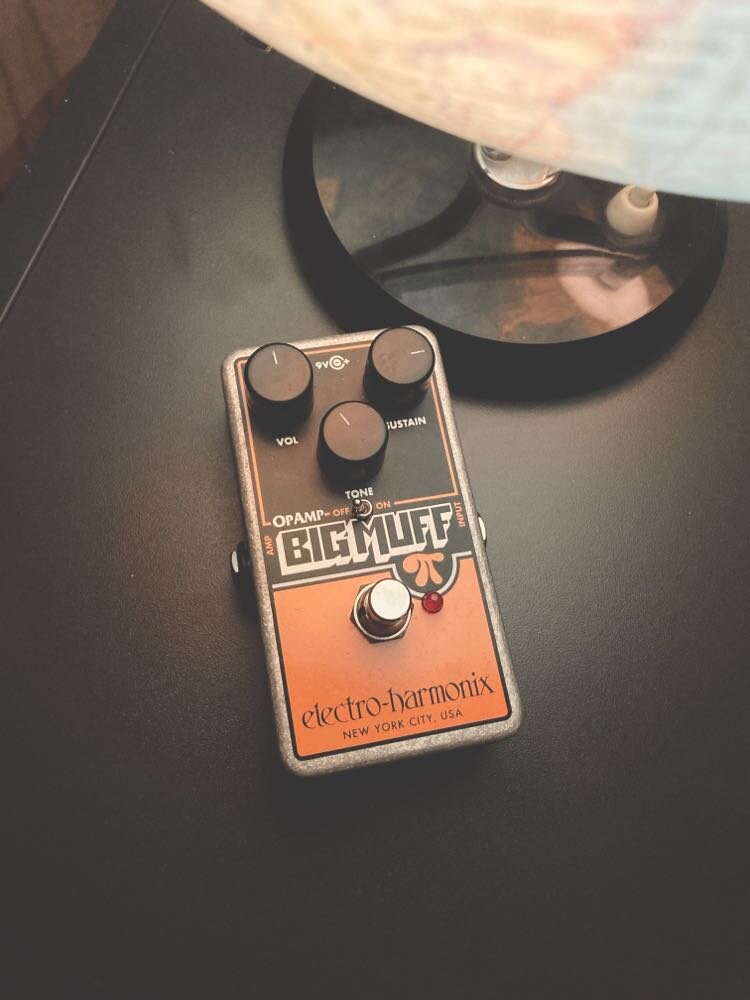
Originally released in 1970, the Electro-Harmonix Big Muff is a classic fuzz pedal, as used by Jimi Hendrix, Carlos Santana and David Gilmour. This is a recreation of the Op-Amp version, from the late-seventies, made popular by Smashing Pumpkins on their ‘Siamese Dream’ album. It’s VERY fuzzy, and VERY cool sounding!